Your First Match on Screen: Follow One Possession
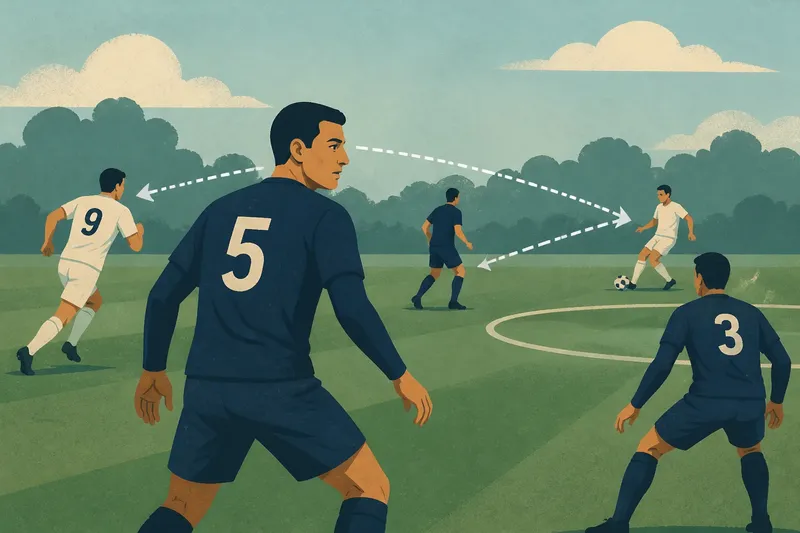
Follow one possession on screen with a simple viewing plan: see who offers an outlet, how the ball advances, and what changes after a turnover.
What should you watch first when a match fills the screen with players, movement, and a ball that seems to vanish? Follow one possession. This simple viewing plan for your first match on screen helps you connect the action to the rules: identify who controls the ball, notice when control changes, and check whether play continues or stops.
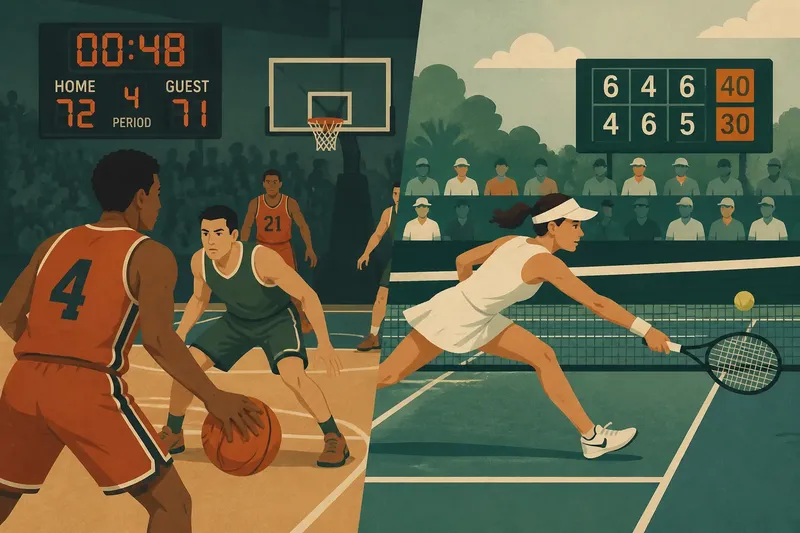
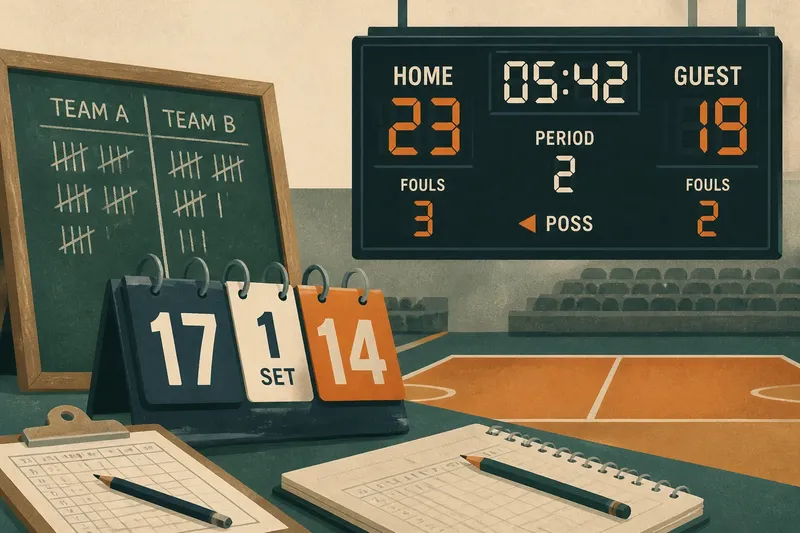
Start by asking one question: is the ball in play, and which team may act on it? The answer can explain a restart, a whistle, or a sudden shift in who has the right to attack. The details differ by sport, so let the broadcast’s score graphic, referee signals, and commentators help identify the rules in force.
Control of the ball determines what can happen next
In sports such as soccer and basketball, teams generally try to keep or gain control of a ball while moving it toward a scoring opportunity. But control does not mean the same thing in every sport. In soccer, a player can control the ball with a legal touch while play continues; in basketball, dribbling and passing are governed by rules that limit how a player may move with the ball.
Listen for the referee’s whistle and watch the signal that follows. A whistle may stop play for a foul, an infringement, or a ball out of bounds. The signal and the ensuing restart tell you which team gets the next chance to act. If the whistle is hard to interpret, wait for the restart rather than guessing from the players’ reactions.
Separate a change of possession from a stoppage
A turnover happens when the opposing team gains control while play remains live. An interception or a lost challenge can cause one. A stoppage is different: the referee halts play, and a restart follows under the rules of that sport. The ball changing direction alone does not tell you which event occurred.
For example, a pass that an opponent collects may produce a live turnover. If the ball instead crosses a boundary, the referee may stop play and award a throw-in, kick-in, or another restart, depending on the sport and its rules. Watch for the whistle, the referee’s signal, and where the restart takes place.
Read the restart to understand the ruling
When play stops, look for three clues: the referee’s signal, the location of the ball, and the way play resumes. A free kick, throw-in, faceoff, or free throw each reflects a different rule and gives the teams different ways to restart. The exact options depend on the sport and situation, so avoid treating one game’s restart as a universal rule.
The broadcast can help fill in the gap. A replay may show what happened before the whistle, while the commentator may name the infringement or explain which team receives the restart. If those clues conflict or remain unclear, keep the observation modest: play stopped, and this team now has the restart.
Which rule clues are easiest to spot?
How can I tell whether the ball is still in play?
Watch for a referee’s whistle, a clear signal, or players preparing for a restart. In some situations, the ball can cross a line and remain live under that sport’s rules, so the boundary alone may not settle the question.
Does every lost ball count as a turnover?
No. If play continues and the other team gains control, it is a turnover; if the referee stops play, the next action is a restart. The whistle and restart usually make the distinction clearer.
Why does the referee point in a direction?
The signal often indicates which team receives the restart or the direction of play, but signals vary across sports and rulings. Pair it with the location of the ball and the restart that follows.
What should I do if I miss the call?
Watch what happens next and listen for the restart’s name. A replay or the broadcast commentary may explain the ruling without requiring you to infer it from a crowded scene.
Use a short sequence to follow the rules in action
Try this simple sequence whenever a passage becomes confusing:
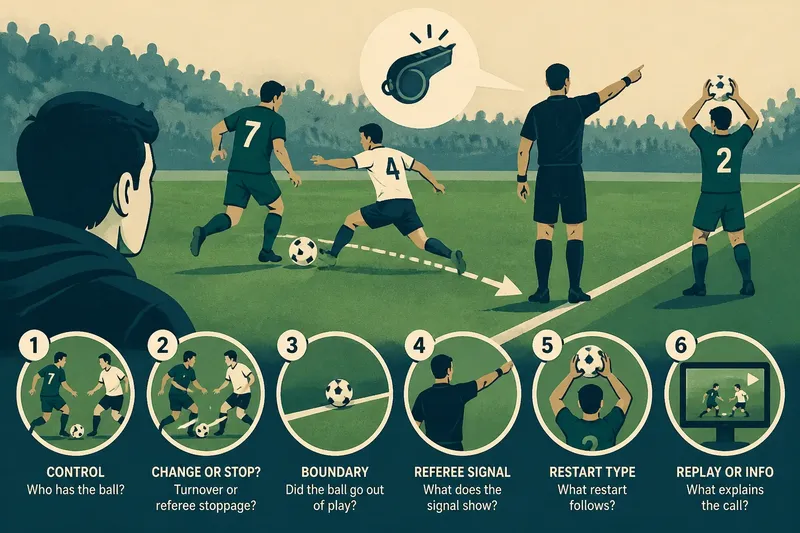
- Check control: If one team clearly has the ball, follow its next action; if control is contested, wait for the referee’s signal or the next clear touch.
- Check for a whistle: If play continues, treat a change of control as a possible turnover; if the referee stops play, look for a restart.
- Check the boundary: If the ball goes out and play stops, watch where the restart is taken; if play continues, follow the live action under that sport’s rules.
- Check the referee’s signal: If it identifies a team or direction, compare that with the restart; if the signal is unclear, wait for the restart rather than guessing.
- Check the restart type: If it is a throw-in, kick, faceoff, or free throw, note which team takes it; if the broadcast names a different restart, use the sport-specific explanation.
- Check the replay or commentary: If either explains the call, connect it to the stoppage; if neither does, keep your conclusion limited to what you saw.
Say you are watching a soccer match and the ball travels toward the sideline. A defender touches it, the ball crosses the boundary, and the referee signals a throw-in for the other team. You note that play stopped rather than treating the event as a live turnover; when the opposing player takes the throw-in, you can see which team received the restart. If the ball had stayed in bounds and an opponent collected it without a whistle, the better reading would be a live change of control.
That is enough to make a confusing passage easier to follow: identify who controls the ball, distinguish a live turnover from a stoppage, and watch the restart for the ruling. For your first match on screen, this possession-by-possession approach gives you a useful rules cue without asking you to memorize every call.