Why a Defender Looks Away from the Ball
Defender scanning helps explain why players glance away from the ball: learn what they check, when they look, and how those glances shape a response.
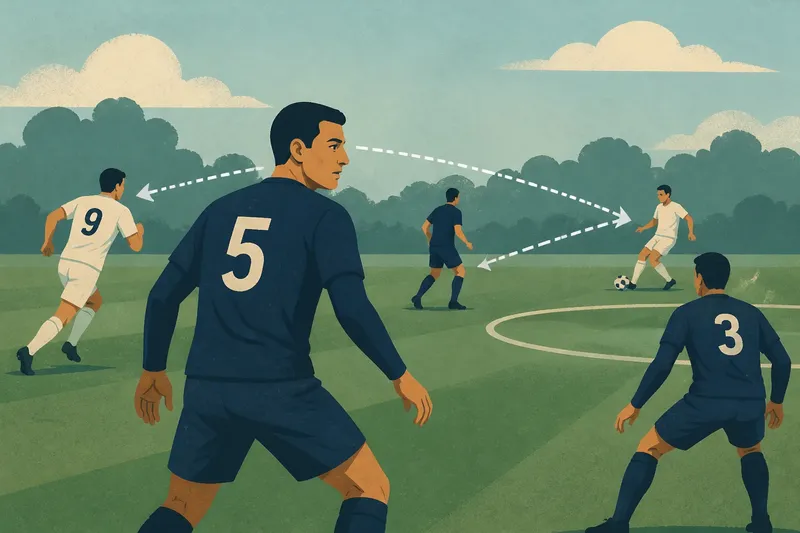
Why does a defender look away from the ball just as an opponent seems ready to pass? Defender scanning is the answer: a quick glance checks nearby space and moving opponents before the ball arrives. The defender is not ignoring play. They are gathering the details that make a pass easier to anticipate.
What does defender scanning mean?
Scanning means briefly shifting attention from the ball to other useful parts of the scene, then returning attention to the play. A defender might glance over a shoulder, check a runner’s position, or notice whether open space is appearing between teammates. The look may be small enough to miss on a live broadcast, but it can shape what the player does next.
That glance is different from staring around without purpose. The defender is looking for information that could change a decision: who is available to receive a pass, where a runner is going, and how much room lies behind or beside the defensive line. The ball remains important; it simply isn’t the only clue.
Why does a defender check space before a pass?
A pass often takes time to reach its target. During that interval, the intended receiver can move, a teammate can close the route, or a gap can open elsewhere. A defender who has already checked nearby space can compare the passer’s actions with a recent picture of the players around them.
That earlier picture matters because looking only at the ball can leave a defender reacting late to a runner arriving from outside their view. A brief glance helps establish where that runner started and whether they are accelerating into a dangerous lane. It does not reveal the future; it gives the defender more context for judging what may happen.
Space also carries information of its own. If a potential receiver is tightly marked, the passer may look elsewhere. If one side of the defense is stretched, a pass into the gap may become more attractive. The defender’s job is not to guess every option correctly, but to notice the options that deserve attention.
What should a defender look for during a scan?
A useful scan answers a simple question: what could become a problem before the next touch? Depending on the situation, the defender may check:
- Nearby opponents: Is someone moving into space, or trying to slip behind a teammate?
- Open lanes: Is there a clear path from the ball carrier to a likely receiver?
- Teammates’ positions: Is another defender already covering the runner or closing the passing route?
- Space behind: Could a forward pass send an opponent beyond the line of defenders?
- The passer’s posture: Has the ball carrier turned toward a receiver or opened their body toward another area?
- Recent movement: Did an opponent just leave a position that another attacker might occupy?
These clues work together rather than as a checklist to recite. A defender might see a runner drift toward a gap, notice that a teammate is stepping toward the ball, and choose to stay with the runner instead of joining the press. The right choice depends on the spacing and the next action, not on any one glance in isolation.
When should a defender look away from the ball?
Defenders tend to scan when the play gives them a moment to gather information: while an opponent carries the ball, as the ball moves between players, or before a likely pass. A glance can also be useful after a defender has turned to recover, since nearby opponents may have changed position during that movement.
The timing is a balance. Look too early, and the information may be stale by the time the pass comes. Look too late, and the defender may have little time to react. Strong scanning is often repeated: glance away, return to the ball, and check again as the situation changes.
The defender still needs to track the ball closely when an opponent is about to shoot, dribble past, or make a sudden move. A scan is a short information-gathering action, not a reason to lose sight of an immediate threat. The player has to switch attention between the ball and the wider scene.
How can a glance help anticipate a pass?
Anticipation comes from combining a recent view of the space with cues from the ball carrier. A defender who has seen a receiver move into a lane may recognize a likely target when the passer turns toward that route. They can then adjust their position, block the lane, or prepare to follow the receiver.
Say an invented defender is watching an opponent carry the ball toward the middle while a forward begins drifting behind the defense. The defender glances over a shoulder, sees the forward moving into open space, then returns attention to the ball. If the passer turns toward that space, the defender can start tracking the runner sooner; the observable result would be a quicker response to the developing pass, not certainty about where the ball will go.
Even when the pass goes somewhere else, the scan can still help. The defender has updated their picture of the scene and can respond to the next option. That is why anticipation is better understood as readiness to react than as prediction.
What can a viewer notice in a match?
Watch a defender away from the immediate contest, especially when the ball carrier has time to look up. Notice whether the defender checks over a shoulder, then shifts position as an opponent moves. The movement may seem cautious or even indirect until the pass is played; then the defender’s earlier adjustment becomes easier to read.
It can help to follow one defender for a short stretch rather than trying to watch the whole formation. Track the ball carrier, the nearest potential receiver, and the defender’s head and body orientation. Ask whether the defender is guarding the ball, a person, or a passing lane. Those priorities can change from one moment to the next.
Broadcast angles can hide the reason for a glance. A camera may show the ball and passer while leaving the runner outside the frame. If a defender turns their head toward empty-looking space, avoid assuming the look was pointless; the relevant opponent may simply be off-screen.
Does a defender need to watch the ball constantly?
No. Watching only the ball can make it harder to notice a runner or an opening, but abandoning the ball is risky too. Defenders shift attention between the ball and nearby threats, using brief scans to refresh their understanding of the space.
Can scanning reveal where the pass will go?
Not by itself. A scan shows positions and movement at a particular moment, while the passer can still choose another option or change their mind. It helps a defender prepare for plausible routes rather than know the outcome in advance.
Why does the defender glance over a shoulder?
A shoulder check can reveal an opponent approaching from behind or moving into space outside the defender’s forward view. That information helps the defender decide whether to stay close, turn to track the runner, or hold a position that protects the lane.
Is every glance away useful?
No. A glance is useful when it gathers relevant information and the defender can return attention to the play in time. Repeatedly looking without a clear purpose, or checking so long that the ball becomes an immediate danger, is not worth the effort.
What does scanning tell you about a defender’s choices?
A defender’s glance is a clue about the problem they are trying to solve. They may be checking a runner, measuring the gap, or confirming that a teammate is covering the route. The next movement—holding position, closing down, or turning to follow—shows how that information shaped their response.
Once you recognize defender scanning, a head turn becomes part of the action rather than a distraction from it. Look for what changed in the space after the glance, then watch how the defender responds when the ball moves. That small sequence makes the logic of defending easier to follow, even when the pass never comes.