Clock Time or Game Time: Two Ways to End a Match
Clock time or game time changes what teams protect and pursue. Learn how timed endings and score conditions shape urgency, tactics and match drama.
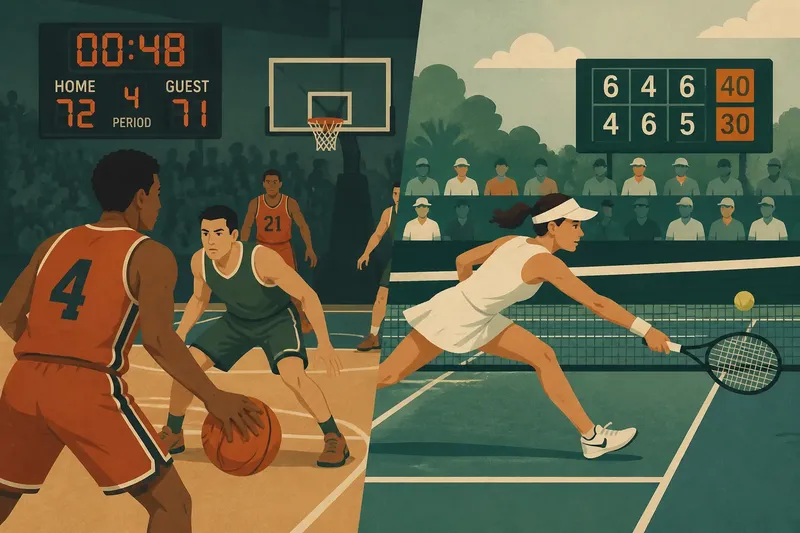
Clock time or game time: which ending makes a match feel more urgent? Watch a basketball team slow its offense as the clock drains, then watch a tennis player chase one more point with no clock to rescue them. Both contests can be tense, but the source of pressure is different: one format counts down a shared allowance of time, while the other waits for a defined play, score or sequence to finish.
That distinction affects more than the final seconds. It shapes what teams value, when they take risks and how spectators read a lead. These eight differences offer a useful way to follow the action without assuming every sport treats time the same way.
1. Timed formats make the deadline visible
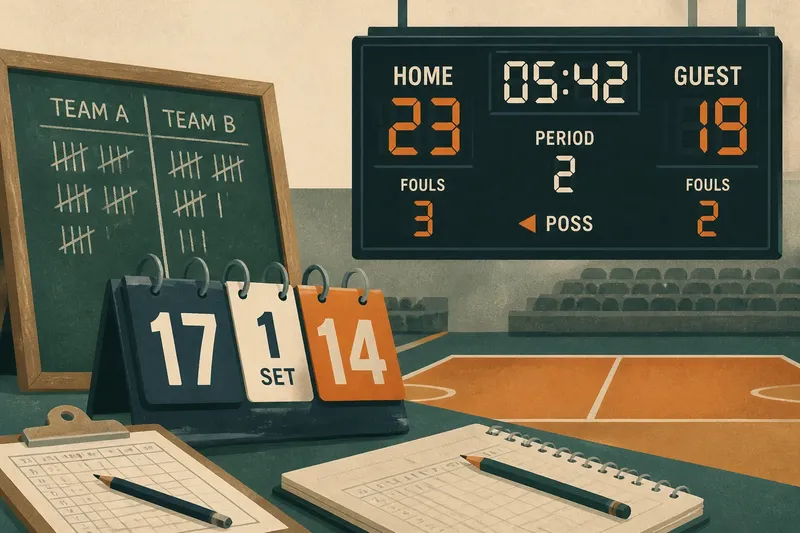
In a timed match, the contest is organized around a clock or a set of timed periods. Soccer, basketball and many forms of hockey use this broad structure, though each has its own rules for stoppages, breaks and endings. The clock gives players a shared boundary: when the allotted play ends, the match reaches its conclusion according to that sport’s rules.
The countdown turns remaining time into a resource. A team that trails may need to create scoring chances before the deadline, while a team in front may prefer to keep possession, defend space or avoid giving away a promising attack. The clock is not merely a display beside the field; it changes the value of a decision. A safe pass can be sensible early and frustratingly passive late.
Timed formats also create a steady sense of approach. Even if the score does not change, the visible clock tells the audience that the opportunity to alter it is shrinking. A close match can feel more urgent as the deadline nears because every remaining possession or attack has less room for a second attempt.
2. Game-time formats make the condition visible
In a game-time format, the contest ends when a defined condition is met rather than when a general clock expires. That condition might be reaching a target score, winning a required number of games or completing a set sequence. Tennis matches, many volleyball sets and some informal or tournament formats use versions of this logic, although their exact rules differ.
Here, a scoreboard or match state often carries more immediate meaning than a countdown. A player can be close to winning without knowing how long the remaining contest will take. The decisive question is not “How much time is left?” but “What must happen next?” A point, round or scoring play may resolve the contest, or it may only move one side closer to that resolution.
This can make the finish feel less like a closing door and more like a threshold. The final condition stays fixed, but the path to it can lengthen if the format requires a margin, a successful sequence or additional play after a tie. Urgency gathers around the condition itself rather than around a clock’s steady retreat.
3. A countdown rewards awareness of the remaining window
Timed matches encourage players and spectators to connect the score with the time available. A one-point lead with plenty of play left is not the same situation as the same lead in the closing moments. The team ahead may still need to attack, while the team behind may have enough time to build patiently rather than force a difficult attempt.
As the window narrows, the trailing side often has reason to accept more risk. It might press higher, attempt a quicker shot or commit more players to an attack. That choice can create a chance to equalize, but it can also expose space for the opponent to exploit. The clock does not dictate a single tactic; it changes the cost of waiting.
For a viewer, the practical cue is to ask how much time remains relative to the task. If a side needs a goal, point or scoring play, can it still build through several exchanges, or does it need to act immediately? The answer depends on the sport and match situation, but that question makes late-game decisions easier to interpret.
4. A target condition keeps each next play relevant
When the finish depends on reaching a score or completing a unit of play, the next event can matter regardless of how long the contest has lasted. A team behind in a set may still have a route back if the target has not been reached. A player who loses one point has not necessarily lost the match; the larger condition determines what that point means.
This structure can produce a different rhythm from the pressure of a countdown. Players may focus on protecting a lead within the current game or set, then reset their attention for the next one. The contest can feel like a series of local tests rather than one continuous race against time. That makes the format legible in stages: win this exchange, hold this game, take this set.
It also means a viewer should distinguish the immediate score from the match condition. A close score does not always mean the contest is close to ending, and a large lead in one segment does not automatically settle the whole match. The rules determine which scoreline actually triggers the finish.
5. Timed endings can leave room for a final attack
A clock reaching its apparent endpoint does not always mean play stops at that exact instant. Some sports allow a current play, attack or attempt to finish; others account for stoppages or use additional periods when a result remains level. These provisions preserve the logic of a timed format while preventing the clock from cutting off an action that the rules treat as still in progress.
For spectators, this is why the sound or sight of a final signal may not tell the whole story. A referee may need to judge whether an attack began in time, whether a stoppage altered the clock or whether a specific end-of-period rule applies. Rather than treating every late action as an exception, read it as part of the sport’s definition of when time has truly ended.
Timed formats can also end without a winner if the competition permits a draw. In other settings, tied scores lead to extra play or another deciding procedure. The clock defines the ordinary boundary, but the competition format determines what happens when that boundary arrives without a decisive result.
6. Game-time endings can extend beyond an expected finish
A condition-based match has no ordinary countdown to settle the question of duration. If neither side has met the required condition, play continues according to the rules. A close set, a long sequence of exchanges or a tied score can therefore stretch the contest beyond what a casual viewer expects.
That possibility changes how a lead feels. Being close to the target can bring intense pressure, but it does not make victory automatic. The leading side may still need to complete the required margin or sequence, while the opponent may have a chance to turn the contest around. Each side is measured against the condition, not merely against the time already spent playing.
Say you are watching a volleyball set with the teams close to its target. One side reaches the target score first, but the rules also require it to lead by a margin. The match continues; the observable result is that neither team can treat the target as a finish line until the margin condition is met. The tension comes from the extra requirement, not from a clock running low.
7. The two formats create different kinds of suspense
Clock suspense is often about compression: there is less time to change the score, so the next decision carries a sharper deadline. Game-time suspense is often about proximity: the winning condition is within reach, but the required play or margin remains unfinished. Both can produce a dramatic finish, but they ask the audience to track different things.
That difference also shapes how momentum is perceived. In a timed match, a burst of scoring late can seem especially important because it consumes part of the opponent’s remaining opportunity. In a target-based match, a run of successful plays may bring a side close to completion, yet one missed chance can leave the condition unmet. The same sequence can therefore feel like a closing push in one format and a step toward a threshold in another.
Neither format makes a contest inherently more exciting. Some viewers enjoy the clear deadline of a countdown; others prefer the self-contained stakes of a target or set. The important distinction is what the players are running out of: time, or distance from the required condition.
8. Read the ending rule before judging the pressure
Before a match reaches its final stretch, check what actually ends it. Does the clock stop play, or does an active play continue? Can a tie stand, or does another period follow? Does a target score need a lead by a margin? Those details explain why a match that looks finished may still be live, or why a narrow lead carries more weight than the display suggests.
Imagine a viewer sees a tied score as a timed period ends and assumes the teams must keep playing. If the competition allows a draw, the result may already be settled; if its format requires a winner, extra play may follow. The visible score is identical, but the ending rule changes what the audience should expect next.
These answers are usually available in a competition’s rules or broadcast explanation. You do not need to memorize every exception. Learn the main ending condition first, then listen for the one rule that changes the finish in that sport or event.
What should you watch for as a match approaches its end?
Does a timed match always stop when the clock reaches zero?
Not necessarily. The sport may allow an ongoing play to finish, account for stoppages or move to an additional period if the score is tied. Check the competition’s stated ending rule rather than assuming every clock works alike.
Can a game-time match last longer than expected?
Yes. A match may continue because the required score, margin or sequence has not been completed. In that format, elapsed time does not settle the result by itself.
Which format creates more urgency for players?
Neither does so in every situation. A countdown presses teams to act before time runs out, while a target condition makes the next required play more consequential as the finish approaches.
How can a new viewer tell what ends the match?
Look for the competition’s format description and note whether the final condition is a time limit, a target, a set count or a combination. Once you know that rule, the scoreboard and late-game tactics become much easier to read.
Use the ending condition to read the final stretch
Clock time or game time is a simple distinction with a useful payoff: it tells you what kind of pressure is building. In a timed match, watch the remaining window and how teams adjust their appetite for risk. In a condition-based match, watch how close each side is to the score or sequence that ends play.
The most useful habit is to pair the score with the ending rule. A scoreboard says where the contest stands; the format tells you what must happen next. Keep both in view, and a frantic final attack or an unexpectedly extended set stops looking mysterious and starts looking like the natural consequence of the game’s design.